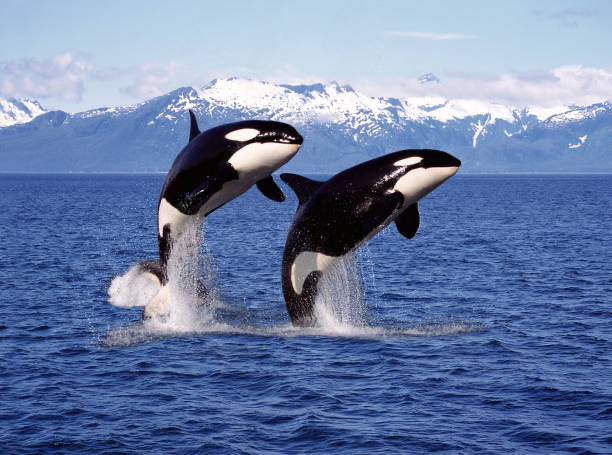
Life in Captivity
What is it like?
The welfare of captive cetaceans (i.e., dolphins, whales, and porpoises) has garnered increasing attention over the years as captivity presents significant challenges for these long-lived, highly intelligent, wide-ranging, and socially complex animals. The present paper provides an overview of the current state of captive cetacean welfare, examining captive facilities, recent improvements, persistent problems, and the clinical/behavioral/neural consequences of confinement.
We specifically address both quantitative and qualitative aspects of captive space, sociocognitive factors, feeding, and welfare concerns such as stereotypies, physical health, reproduction, and lifespan. The contrast between the restrictive nature of captive environments and the dynamic, multifaceted characteristics of the natural environment highlights the difficulties faced by cetaceans in captivity.
Despite efforts by some facilities to improve conditions, serious welfare challenges persist, raising critical ethical concerns about the well-being of captive cetaceans.
Intelligence, Cognition and Emotion
Earlier studies of a different type, done with live dolphins in Russia, showed that the pathway from the inner ear to the cortex of the brain culminates at the apex of the brain next to the visual processing area. All of that made sense because dolphins are echolocators and integrate visual and acoustic information very quickly.
The unique arrangement of the dolphin brain was added to existing pathways already laid down in mammals.
DTI is used to examine connections in the postmortem dolphin brains, and it was discovered that something never before seen: yet another pathway from the ear to a different part of the brain, the temporal lobe, where the primary auditory cortex of most mammals is located.
This second connection shows that the unique arrangement of the dolphin brain was added to existing pathways already laid down in mammals.
What can you do?
Every person has the power to help end orca captivity. By donating, you’re directly supporting rescue efforts, ocean sanctuaries, and organizations working to relocate captive orcas into healthier, more natural environments. Contributions also fund research, legal advocacy, and public education that push for lasting change. Even small donations make a difference when combined; they become a powerful force that can give these intelligent, social animals the freedom they deserve.